Small-scale nature displays spark wonder, especially when you get the right balance in your micro terrarium ecosystem. If you picture rain-dappled forests, you’re halfway to understanding the magic of moss terrariums, which bring that lush charm right to your windowsill.
Moss terrariums thrive in forgotten, dim spots where sunlight is scarce but curiosity grows. Choosing the best moss for low-light enables you to keep a living, thriving piece of the wilderness indoors. There’s artistry in selecting the right variety.
If you’ve ever wished for a calming, evergreen world encased in glass, this article unlocks the secrets to selecting low-light moss types and nurturing them in your own micro terrarium ecosystem. Discover textures, shapes, and techniques to design your perfect moss habitat.
Choosing Mosses That Adapt to Dim Conditions Boosts Your Success Rate
Adapting your plant choices to low-light conditions is the first step for thriving moss terrariums. Some mosses simply perform better when tucked away on a bookshelf or in a darker corner.
The right species won’t just survive; they’ll maintain a lush, healthy look all year. Let’s break down the specific options for lasting green in your micro terrarium ecosystem—without needing a sunroom.
Sheet Moss: The Easygoing Evergreen
Many terrarium enthusiasts lean toward sheet moss (Hypnum spp.). It covers surfaces like a green rug, creating a classic forest floor look without fuss. If you want a unified background with steady growth, start here.
In practice, sheet moss accepts low light and variable moisture levels. A person could say, “I left my micro terrarium closed for two weeks, and the sheet moss still looked vibrant—no brown patches or wilt.” That reliability makes it a favorite.
Work sheet moss into crevices of driftwood or stones, pressing it gently for good contact. Maintain consistent misting for the first two weeks. This simple step can transform a scattered patchwork into a solid green carpet.
Cushion Moss: Bringing Subtle Height
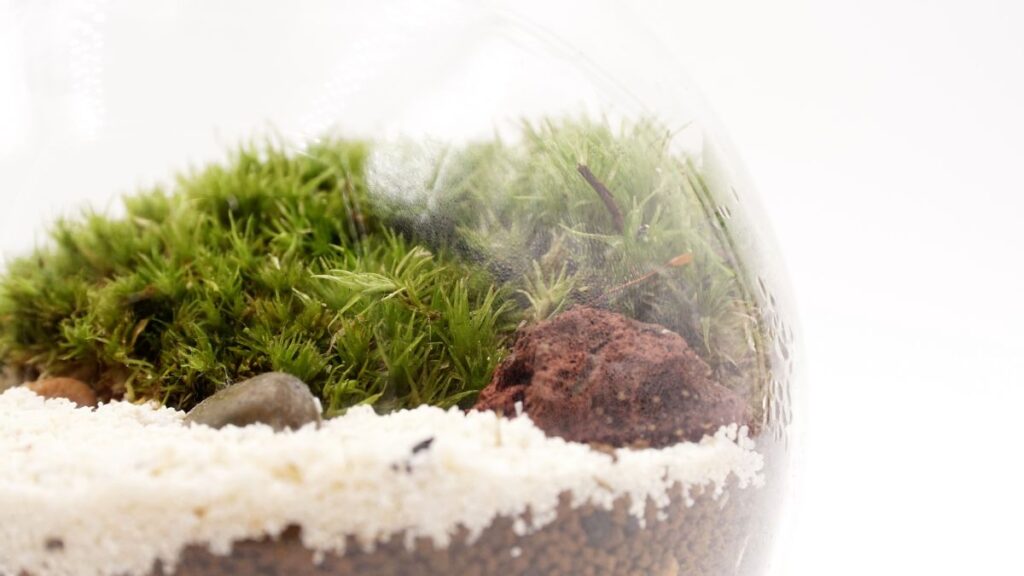
Cushion moss (Leucobryum spp.) adds visual depth with its compact, dome-like mounds. It’s well-suited for micro terrarium ecosystems where structure and dimension matter as much as color. Cushion moss creates miniature hills and valleys, echoing natural woodland landscapes.
Unlike sprawling mosses, cushion moss grows upright, keeping its tidy form in low to moderate light. If you notice your moss forming tight clumps, it’s adapting well to the environment. Give it space so air can circulate around the “pillows.”
When you introduce cushion moss, press the base into moist substrate, then lightly mist the terrarium. Repeat every three days until moss rehydrates and stands upright. This single, repeatable routine keeps your ecosystem stable and beautiful.
| Moss Variety | Light Tolerance | Best Used For | Takeaway for Setup |
|---|---|---|---|
| Sheet Moss | Low to moderate | Ground cover; seamless carpet | Press gently into substrate, mist regularly until established |
| Cushion Moss | Low | Adding height, soft mounds | Scatter pieces apart to promote airflow and mound shape |
| Feather Moss | Low light with indirect sun | Textured layering and slopes | Spread thinly for feathery visual, avoid overwatering |
| Java Moss | Extremely low; tolerates shade | Water features, rocky backgrounds | Attach to hardscape using mesh or string until rooting |
| Fern Moss | Low to medium | Lush, upright accents | Use in higher humidity micro terrarium ecosystems |
Matching Moss Features to Micro Terrarium Layouts Prevents Frustration
Fine-tuning your design means matching moss habits to micro terrarium layouts. A sprawling moss won’t suit a tall, narrow jar; an upright species overpowers a shallow tray.
Think of your setup like arranging furniture in a tiny apartment. Purposeful choices save space and create harmony, promoting both plant health and visual balance. Here’s how to match the moss to the container’s needs.
Feather Moss Adds Texture in Layered Scenarios
Feather moss (Pleurozium schreberi) shines in designs mimicking wild slopes, hills, or layered woodland floors. Its feathery, bright green growth spreads horizontally, mimicking the gentle chaos of nature and helping bridge gaps between rocks or wood.
- Layer feather moss in semicircular rings for a graduated, hill-like effect rather than flat coverage.
Spread moss thinly so each strand fills gaps—this pops under glass lighting. - Combine with miniature ferns to mimic forest understories.
Contrast brings out texture while maintaining unified growth habits. - Pile feather moss at the edges for a “creeping” effect.
Place denser moss clumps in the center, fading to thinner layers at the periphery for depth. - Space each patch a finger-width apart.
This lets air circulate and prevents both mold and fading. - Mist with a gentle spray every three to four days.
Let the eco-system dry slightly between misting for best feathery texture retention.
By alternating moss types and adjusting density, you guide the viewer’s eye. This hands-on planning ensures moss terrariums showcase layered habitats, not just green masses.
Java Moss Thrives on Water Features and Rocks
Java moss (Taxiphyllum barbieri) attaches firmly to rocks or driftwood. Once established, it weaves intricate webs, creating underwater forest illusions and lively accents in your micro terrarium ecosystem.
- Wrap java moss around stones or miniature logs.
Securing it with cotton thread or fine mesh supports root establishment and stops clumps from floating away during misting. - Position moss near tiny water features for lush growth.
Java moss loves extra humidity and will sprawl outward, filling crevices and covering wet substrate elegantly. - Keep java moss trimmed every few weeks.
Snip any brown or fading sections to spark fresh, bright green regrowth. - Alternate between java moss and upright species.
Pairing with cushion moss or small ferns reinforces a sense of organic diversity. - Spot-mist to boost local humidity.
Direct a fine spray at java moss clumps without oversaturating the rest of the micro terrarium ecosystem.
With these techniques, java moss will quickly become a dynamic centerpiece. You can transform bland jars into living sculptures in just a few weeks.
Establishing Stable Humidity Means Reliable Moss Growth
Managing humidity inside a micro terrarium ecosystem stabilizes moss color and health. Most low-light mosses need consistently moist air, but not permanent wetness. Replicate woodland dew, and your moss terrariums will flourish without rot or dullness.
Humidity Management for Low-Light Moss Survival
Begin with a tightly sealing lid and a base layer of damp substrate—think sphagnum or coconut coir. When you notice moisture beads on the glass, your moss is entering its optimal range. If condensation lasts all day, crack the lid for one hour daily.
Layer mosses at least one inch from the top to prevent spore buildup and yellowing. Mix in some activated charcoal under your substrate; this blocks odors and stops mold from spreading to delicate moss mats in your terrarium.
Check humidity mid-morning when temperatures stabilize. Insert a finger and assess: is the substrate moist but not soggy? Adjust misting if it sticks rather than dampens. Tracking these sensory cues brings consistency to moss terrarium care routines.
Condensation Control Prevents Disease
Water droplets running down the glass can spell trouble, signaling excess humidity and potential mildew growth. If your moss terrarium fogs up before midday, remove the lid briefly to vent excess moisture and refresh airflow.
Check for fuzzy white or gray patches by flashlight each week. These hint at emerging mold. Scrape away suspect sections immediately, and space moss plugs further apart on your next replanting for improved ventilation.
For stubborn moisture, aim a small fan outside the glass for 10 minutes. This move resets the humidity microclimate and curbs disease. Practice these rhythms: vent briefly, inspect weekly, and adjust airflow whenever the ecosystem feels “swampy.”
Incorporating Decorative Hardscape Builds Dramatic Moss Impact
A well-placed stone or branch acts like a frame in a shadowbox, emphasizing the living art of moss terrariums. Adding hardscape makes your micro terrarium ecosystem richer, both visually and in plant health.
Creating Visual Focus With Contrasting Mosses
Position a dark lava rock at the rear of your setup, then tuck lighter moss (like fern moss) around the base. Sharp contrasts help highlight delicate textures and guide viewer attention to key corners of the miniature landscape. Repeat colors in rocks and moss for harmony.
Combine cushion moss “pillows” with jagged mineral slabs. Mimic scenes where nature softens the rough edges of stone, yielding vivid, storybook contrasts. If a visitor exclaims, “That looks just like a hidden glen I once hiked,” you’ve succeeded in naturalistic design.
Space hardscape elements an inch apart so light, moisture, and moss can intermingle. Always check that moss roots contact damp substrate, not dry stone, for stable growth. Rotate the jar weekly for even coverage of both moss and hardscape.
Elevating Humble Jars With Vertical Layers
Balance horizontal ground cover with upright elements. Insert driftwood branches at a 45-degree angle to suggest fallen logs or tree limbs slowly decaying in a real micro terrarium ecosystem. Weave sheet or fern moss partially up the sides of wood for cascading, water-like movement.
Use stackable stones to create miniature ledges. Place feather moss on upper tiers for wispy outlines, and plant cushion moss at the base for density. Imagine you’re building steps or terraces; this makes your composition dynamic from every viewing angle.
Secure all pieces lightly, avoiding force that compacts the substrate. Stable, upright layers add drama without damaging delicate moss mats. Try alternating stone heights, or let one piece arch over another, evoking the unpredictability of real-world terrain.
Slow and Steady Moss Maintenance Pays Off in Longevity
Routine attention keeps moss terrariums healthy for months or even years. Quick check-ins prevent brown edges, mold outbreaks, or slow decline, while a regular misting schedule supports vibrant green over time in your micro terrarium ecosystem.
Consider moss analogous to a pet that enjoys calm, steady routines—too much change can startle or stress it. Stick to a weekly rhythm for the best results. This strategy maintains both beauty and ecosystem function in your miniature display.
Weekly Care Checklist for Moss Longevity
Every Sunday morning, lift the jar’s lid and visually inspect all moss surfaces for color, texture, and new growth. Remove any spotted, yellowing, or decaying areas using clean tweezers. This immediate response prevents spread and supports healthy regrowth.
Mist gently if the surface feels dry to the touch. Use distilled water to avoid mineral residue and leaf spots. Expect less misting in cooler seasons; humidity lingers longer when temperatures dip.
Rotate your terrarium a quarter turn every week. This small act ensures balanced light exposure, color evenness, and upright growth—preventing crooked mats that reach only toward the nearest window or lamp.
Cue-Based Maintenance for Dynamic Micro Terrarium Ecosystems
Listen to physical signs—a musty smell, limp moss, or beads on glass mean something’s changed. Inspect for tiny insects each week, encouraging beneficial microfauna like springtails but removing pests by hand.
Schedule deep cleanings once each season. During this session, take out all moss, refresh substrate and stones, then replant sections with clean, hydrated hands. This process mimics “spring cleaning” for your micro terrarium ecosystem, restoring liveliness without harsh chemicals.
Document growth progress with phone photos. Look for patterns: fast-spreading patches, slow brown corners, or sections that refuse to fill in. Review these every few months to refine your routine, swap struggling moss, and celebrate achievements.
Frequently Asked Questions
What’s the best way to keep humidity steady in a moss terrarium?
Use a jar with a secure lid, start with a moist substrate, and mist every 3–4 days. Watch for condensation and vent briefly if glass stays foggy. Track moss color and substrate feel as humidity cues.
How frequently should I water my micro terrarium ecosystem?
Moss prefers evenly moist—not soggy—conditions. Mist lightly when moss color looks dull or surface dries. In lower light, water less frequently to prevent rot. Adapt based on room temperature and season.
Can I mix multiple moss types in one terrarium?
Yes, as long as they share similar light, moisture, and temperature needs. Arrange slow-growers apart from spreading types, and leave breathing room between patches to reduce mold and support healthy growth patterns.
Why does my moss turn brown at the edges?
Brown edges may signal dry air, direct sun, or excess minerals. Move your terrarium to indirect light, mist consistently with distilled water, and snip away affected portions to encourage regrowth. Check for pests as well.
Do closed or open containers work better for moss terrariums?
Closed jars maintain high humidity, which suits most low-light mosses. Vent once a week to refresh air. For species preferring airflow, opt for a wide-mouthed terrarium and mist slightly more frequently for consistent moisture.