Designing a micro terrarium ecosystem feels like creating a tiny world. Picking ground covers halfway between art and science transforms bare soil into a living tapestry. Each leaf and sprig matters at this scale.
Micro terrariums reward detail-oriented indoor gardeners. Whether you’re layering mosses, adding creeping foliage, or arranging miniature ferns, appreciating the options helps you get realistic landscapes. Ground covers naturally tie scenes together.
Throughout this article, discover precisely which ground covers thrive in micro terrarium setups. Step-by-step advice, hands-on checklists, and practical comparisons help you build lush, healthy, self-sustaining atmospheres.
Selecting the Right Ground Covers for Your Micro Terrarium Vision
Choosing ground covers for a micro terrarium ecosystem simplifies decision-making at the start. Use a checklist for size, humidity preference, and growth habits to focus your plant shopping. Prioritizing these factors leads to success.
Picture someone holding a palm-sized glass orb, debating between a carpet of cushion moss or a few strands of baby tears. They ask, “Which ground covers best mimic a woodland floor?” Following criteria makes those moments less daunting.
Match Growth Rate to Container Size
Rapidly spreading ground covers can quickly outgrow their space or crowd delicate plants. Try slow growers, like Selaginella, for tightly enclosed terrariums. “I want something controlled,” one hobbyist notes, “so nothing needs weekly trimming.”
Monitor plant vigor before adding more specimens. Remove sections showing signs of crowding for better airflow. Alert eyes spot healthy, bright foliage versus limp or discolored growth, adjusting plant count to support balance.
Compare terrarium plans: people seeking lush, layered looks prefer sprawling ground covers, while miniature landscape minimalists select compact or single-species carpets. Listen and adjust plant picks based on what your scene needs—and your maintenance goals.
Assess Light Preferences and Companion Plants
Many ground covers for micro terrariums prefer medium indirect light or lower. Pair varieties with similar needs for best results. Ferns, mosses, and certain creeping vines all play well together under diffuse LED setups.
Yellowing leaves or leggy stems mean too little or too much light. Be intentional about grouping shade lovers together. Someone assembling a woodland scene with moss, selaginella, and small fittonia might write, “Medium light for all—less hassle!”
Integrate ground covers without overwhelming companions. Mix leaf shapes, textures, and shades for nuanced depth. Avoid large-leaved species that shade out or physically suppress lower-growing ground covers. The plant’s habits dictate placement every time.
| Ground Cover | Preferred Light | Growth Speed | When to Choose |
|---|---|---|---|
| Cushion Moss | Low to Medium | Moderate | Natural forest look; adapts to enclosed glass |
| Baby Tears | Medium | Fast | Bright green mat in compact spaces |
| Peacock Moss | Low to Medium | Slow | Blue-green tones; pairs with taller plants |
| Selaginella | Medium | Slow | Great for humidity; fernlike foliage |
| Pilea glauca | Medium | Fast | Trailing stems; silvery color for contrast |
Pairing Ground Covers for Visual and Functional Harmony
Making ground covers look intentional next to moss, micro-ferns, or stones results from thinking about contrasts in leaf texture and color. Your terrarium feels more like a true ecosystem, not just a collection.
For each feature—mini waterfalls, wood sections, or hills—ground covers solve visual gaps and engineer microclimates. Cover the substrate evenly, or let some gravel and wood show for realistic forest effect.
Layering Texture and Height Adds Realism
Blending species like cushion moss with creeping fig moves the eye across the terrarium scene. People say, “I want it to look wild, not overdesigned.” Use a checkerboard of fine, medium, and bold textures for ground covers.
- Cushion moss forms a soft velvety carpet, making the arrangement appear calm and seamless. Choose green tones for an uninterrupted base, and fill corners first for steady coverage.
- Fittonia’s dimpled leaves contrast broad or trailing species—ideal for defining “paths” or open glades in your miniature landscape. Create curves and step back to check realism.
- Peacock moss offers feathery blue-green elevation. Use nearby darker elements so its shimmer stands out without overwhelming. Pair with woody accents for a woodland effect.
- Baby tears fill dips and valleys between larger plants, creating smooth transitions from one area to the next. Trim with craft scissors to avoid loose, stringy growth along edges.
- Pilea glauca’s trailing vines break straight lines around tunnels or behind rocks. Drape a few stems for the illusion of aged, mature ground cover linking different microclimates.
Shapes that blend or overlap, rather than straight boundaries, produce a more natural look. When arranging, shift individual ground covers to fine-tune spacing and avoid abrupt color blocks.
Preventing Overcrowding and Root Competition
Micro terrariums have zero tolerance for ground covers that quickly swamp their neighbors. Set clear borders using pebbles or driftwood for containment. Someone might say, “I learned to stop my baby tears right at the fittonia line.”
- Always trim new growth every two weeks, so aggressive ground covers don’t escape boundaries and climb or suffocate others. Inspect closely for tiny runners hidden beneath leaves.
- Divide root masses gently during initial planting. Space ground covers so at least 1/2 inch of substrate remains visible between patches to reduce competition.
- Choose compact cultivars over wild types if maintenance is an issue. Miniature cultivars preserve diversity without turning terrariums into single-species lawns.
- Add slow-release organic fertilizer only to established areas once a month. Overfeeding turbocharges some ground covers, risking a boom of invasive growth.
- Watch for airborne algae, which sometimes deposit as green “dust” on moist ground covers. Swab with a cotton bud before it turns slimy or overwhelms desired plants.
Divide plants with patience and never force aggressive roots into narrow, curved sections. Preserve both visual balance and individual plant health for the long term.
Cultivating Healthy Growth Habits for Ground Covers in Enclosed Ecosystems
Commit to routine observation and care from day one to keep ground covers thriving. Healthy habits stem from clear schedules and consistent, measured actions, not guesswork. Avoiding surprise die-off or mold outbreaks is easier when you start with a template.
Maintenance in a micro terrarium takes less than 10 minutes a week, but makes all the difference. Healthy ground covers transform a static scene into a living, responsive ecosystem.
Consistent Moisture and Gentle Watering Techniques
Use spray bottles to mist ground covers evenly once or twice weekly. The sound of a light spray, not a splash, tells you you’re on the right track. Target just the top layer—a handful of droplets per square inch.
If condensation clouds cover the terrarium, wipe the glass and skip a day of watering. A person inspecting their creation before work might say, “Just light mist today—the mosses feel damp already.” Mist from above to mimic natural dew.
Avoid direct streams or heavy drips, which compress delicate foliage or expose bare spots on mosses. Repeat in patterns to develop muscle memory. You’ll learn to notice subtle color changes after watering.
Light and Humidity Balance Keeps Ground Covers Lush
LED grow lights on a timer ensure ground covers get reliable illumination—around 10 to 12 hours daily. Position light sources outside the container to avoid heat buildup and foliage burns.
Humidity domes or plastic wrap maintain microclimates for moss species, especially in drier indoor air. Remove for 30 minutes a week for fresh airflow and fungal prevention. “Leave the lid off while making coffee,” suggests one terrarium hobbyist as a reminder.
Look for signs of too much moisture—fuzzy mold, softened stems—and decrease misting frequency. Balance comes from reading visual clues, not sticking to inflexible rules.
Creating Natural Microhabitats Using Ground Covers and Decorative Elements
Strategically place ground covers alongside stone chips, bark, and driftwood to shape distinct microhabitats within your mini terrarium. These combinations let you mimic streams, hillsides, or shaded valleys even at palm-sized scale.
Reimagine a sun-drenched forest clearing, a mossy ravine, or a rocky glade using three or more textures in close proximity. The right ground covers elevate artificial landscapes to compelling, almost believable scenes.
Designing Streambeds and Pathways in Miniature
Lush lines of ground covers, bordered with small gravel, give the illusion of streams or paths winding through your terrarium. Use baby tears for shallow “banks,” and peacock moss for waterside lushness.
Thresholds matter: define where moss ends and “water” begins using irregular stone strips, not sharp edges. Keep transitions gentle. Someone might arrange stones with one hand and say, “I want this path to feel unplanned, like real woods.”
Add the finest pebbles along edges to weigh down delicate ground covers and prevent their spread into stream zones. Adjust every few weeks to refresh the effect or open new paths.
Simulating Forest Floors and Sunny Clearings
For dense shade, combine cushion moss and miniature ferns with scattered bark chips. Rotate the container to view from all sides, ensuring realistic coverage whether observed up close or across a shelf.
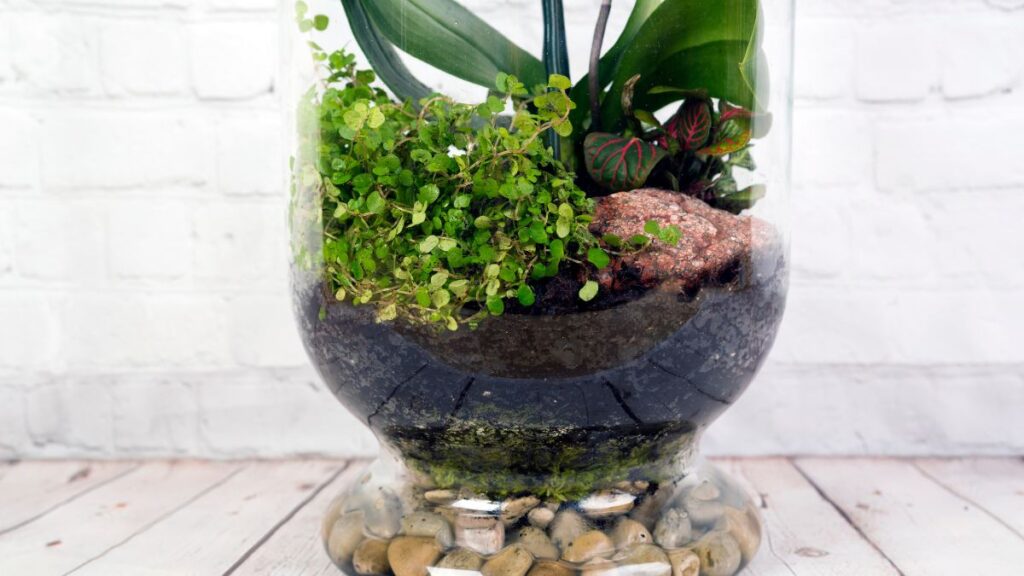
Pilea glauca or baby tears near miniature orchids evoke moist, dappled glades where indirect light supports diverse growth. Blend species in small, hand-shaped bunches, moving pieces with tweezers for accuracy.
For open, sunlit sections, introduce sandy soil topped with tiny gravel and just a sprig or two of low-growing fittonia. Simple placement mimics sparse, bright clearings with room for airflow.
Adapting Ground Cover Choices to Humidity and Maintenance Routines
Start by matching ground covers to your maintenance preference and your indoor climate. If your home runs dry, favor mosses and selaginella in closed terrariums for low-stress care. In humid zones, more variety flourishes.
Listen for cues: “Dry air turned my moss brown—I swapped to hardy pilea.” That direct observation leads to better outcomes than any general rule. Personalize your approach each month as seasons shift.
Maintenance-Friendly Choices for Beginners
Cushion moss, peacock moss, and slow-growing selaginella offer forgiving routines for first-timers. They rarely swamp neighbors or require weekly trimming. Use a part-shaded shelf as your setup spot for less micromanagement.
Pair only one or two companion species per terrarium initially. This reduces stress during maintenance and reveals which ground covers fit your routine. Add more variety later as comfort grows.
Pick water-retentive substrates like coir and sphagnum under moss patches. They limit drastic swings in moisture levels. Periodically poke below the surface—slightly cool, moist soil signals everything’s on track.
Frequently Asked Questions
What’s the most beginner-friendly ground cover for micro terrariums?
Cushion moss is usually the easiest option for most beginners. It adapts to closed glass, requires infrequent trimming, and quickly signals its health through vibrant color alone. Start with small patches and expand as confidence builds.
How do I deal with mold growing on my ground covers?
Increase airflow and remove the terrarium lid for thirty minutes daily to discourage mold. Trim away any affected sections with clean scissors. Limit misting during cooler months and space ground covers further apart to reduce humidity buildup without sacrificing lushness.
How frequently should ground covers be watered in micro terrariums?
Mist most ground covers once or twice per week, observing foliage daily for signs of dryness or soggy patches. Reduce frequency if condensation obscures the glass or if fungal growth appears. Overwatering remains the most common issue, so err on the drier side whenever uncertain.
Can I mix multiple ground cover species in one terrarium?
Mixing species adds depth and visual intrigue, but select varieties with similar light and moisture needs. Separate aggressive spreaders (like baby tears) with hardscape barriers, such as small stones or driftwood, to keep varieties from overtaking one another over time.
Why are my ground covers turning yellow or brown?
Yellowing typically signals too much sunlight or water. Move the terrarium to a location with filtered light and allow the top layer to dry slightly between mistings. Remove affected patches so healthy ground covers can regenerate without competition from weakened tissues.