This morning, you spot an empty jar on your kitchen counter and see not just clutter but opportunity. Instead of tossing it, you start imagining how it might fit into your growing collection of terrarium tools—those clever devices for tending micro terrarium ecosystems.
For micro terrarium ecosystems, finding the right terrarium tools is a game-changer. You don’t need to splurge on specialty items. With a little creativity, everyday household objects can be transformed into efficient, budget-friendly gear for planting, pruning, and decorating your small-scale green worlds.
This article guides you through realistic, actionable ways to make and use homemade terrarium tools. By the end, you’ll move confidently from planning to hands-on crafting—each step designed for those who love ingenuity, efficiency, and a touch of practical magic.
Turn Kitchen Items into Terrarium Essentials in Under Ten Minutes
A butter knife, bamboo chopstick, or metal straw becomes the Swiss Army knife of your terrarium toolkit when applied with intention. Setting aside ten minutes is enough to invent new tools from items you already have on hand.
Converting common kitchenware allows you to sculpt, plant, and position with far more precision. This adaptation removes the hassle of searching for specialized tools and puts you in control of shaping your micro terrarium ecosystem quickly and with minimal fuss.
Bending Spoons for Planting at Awkward Angles
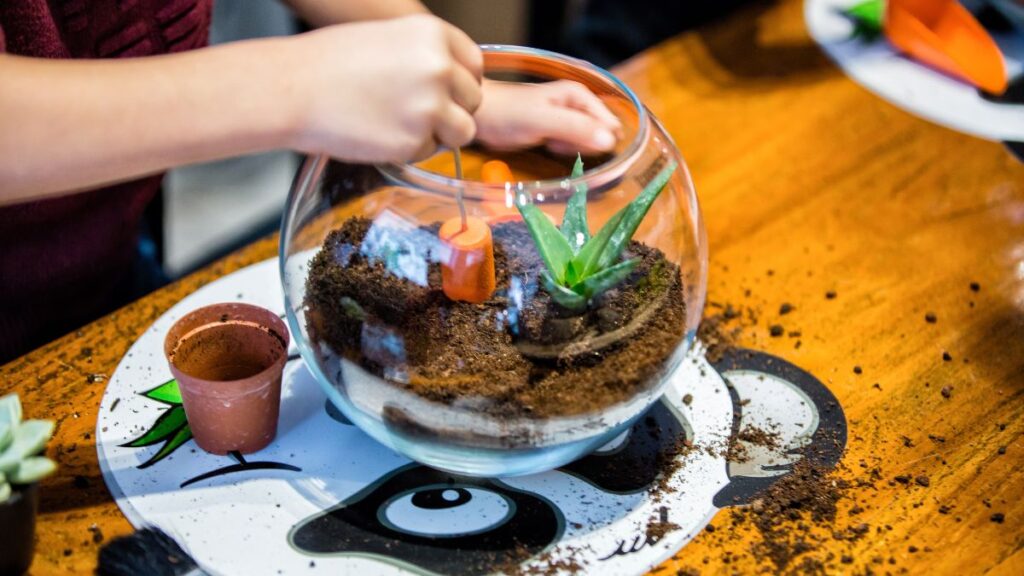
Grasp a small metal spoon and gently bend its handle into a curve, creating an extension that fits narrow-neck containers. Just like a gardener needs a trowel, your custom spoon can scoop, press, and maneuver soil exactly where roots want to go in small terrariums.
When you hold the spoon by the bent end, your wrist naturally guides the scoop into tight corners, making traditional tools feel bulky by comparison. Repeat a similar process using plastic teaspoons for even lighter work in extremely small micro terrarium ecosystems.
One enthusiast, Sarah, shared, “I use my bent teaspoon to nudge moss to the back of narrow jars. It’s perfectly precise—something garden tongs just can’t do in tiny spaces.” Copy her approach by varying the degree of bend to match your project’s needs.
Chopsticks as Plant Support and Seedling Transplanters
Chopsticks maximize reach without disturbing delicate roots. Wrap one end with a strip of cotton fabric for a gentle plant-friendly touch, or secure a bit of sponge to dab away excess moisture.
Instead of squeezing tweezers into awkward jars, guide a plant’s stem upright by swiftly lowering the chopstick into place while holding the fragile sprout. The smooth surface keeps roots from snagging and injuries to a minimum in these compact ecosystems.
For best results, dedicate one chopstick for each main function: planting, pruning, and cleaning. You’ll avoid cross-contamination and boost efficiency as you tend your micro terrarium.
| Household Item | Main Function | Tool Adaptation | What to Try Next |
|---|---|---|---|
| Butter Knife | Scooping and Leveling Soil | Bend tip for tighter areas | Experiment with serration for root trimming |
| Chopstick | Plant Staking & Lifting | Wrap tip with cotton or tie a sponge | Pair with rubber band for gentle grip |
| Metal Straw | Directed Watering | Bend tip slightly | Attach a fine mesh for misting |
| Plastic Funnel | Layering Substrates | Cut tip for controlled flow | Insert mesh filter to separate |
| Old Toothbrush | Leaf Cleaning & Algae Removal | Snip bristles to desired stiffness | Sanitize brush before each use |
Repurposing Bathroom Gear for Spotless Mini Terrarium Maintenance
A clean workspace keeps micro terrarium ecosystems thriving. Your bathroom drawer is full of items you can modify into powerful yet gentle terrarium tools dedicated to cleaning, watering, or fine-tuning plant placement.
For efficient terrarium maintenance, designate specific bathroom tools for particular tasks. Color-tag hairpins, use disposable razors for precise cutting, or transform old tweezers into mini weeders—all without sacrificing your main grooming supplies.
Adapting Toothbrushes for Gentle Cleaning
Snip or angle the bristles of an old toothbrush to tailor its texture. Sweep algae off glass while keeping foliage unharmed. Moisten the bristles with distilled water and swirl across the interior walls of your micro terrarium ecosystem.
- Label designated toothbrushes for cleaning to avoid hygiene mix-ups while saving resources and keeping terrarium glass sparkling.
- Use a toothbrush’s slender handle to wedge fallen debris out of tight corners in jar setups, preventing plant decay and soil mold.
- Dab the bristles in diluted vinegar to tackle stubborn stains, always rinsing thoroughly since terrarium tools should never leave behind chemical residues.
- Pair a stiff-bristle brush with a soft-bristle one, alternating as necessary for deep cleaning and gentle touch—ideal for different container sizes.
- Store cleaned brushes upright in a dry, labeled container with your other terrarium tools for easy access and to prevent cross-contamination.
Well-maintained cleaning tools streamline your routine, making it practical to clean even the tiniest corners.
Reworking Cotton Swabs and Tweezers for Precision Jobs
Trim a cotton swab for narrow access and use it to apply plant-safe treatments, or moisten it to remove condensation marks. Bend tweezers to shape them for grabbing and replanting tiny shoots.
- Add colored tape to tweezers’ tips for clear visibility, allowing you to spot them among your other terrarium tools and avoid unintentional plant damage.
- Keep a pack of cotton swabs on hand for tiny repairs—touching up moss, lifting dirt from fragile stems, or applying a hint of fertilizer without overdoing it.
- Sterilize tweezers and swabs before use, using rubbing alcohol to prevent unwanted spores or algae in your contained terrarium ecosystem.
- Designate separate swabs for cleaning glass and for touching live plants, minimizing the risk of transmitting fungus or rot between surfaces.
- Pair tweezers and swabs as a team—tweezers for pinch-lifting, swabs for fine detail—keeping your terrarium tools organized by function and use frequency.
Combining these household tools lets you maintain pristine, healthy micro ecosystems without stress or extra expense.
Transform Office Supplies Into Sustainable Planting Devices
Most office supplies already feature shapes and sizes perfect for micro terrarium work. Binder clips, paper straws, and paintbrushes can all become specialized terrarium tools, boosting your efficiency and reducing overall waste.
Instead of tossing spent office supplies, sort them by material and size. Try these realistic examples for new, effective uses:
Paper Clips as Soil Levelers and Mini Rakes
Straighten a paper clip, then curve one end into a hook. Flatten the opposite end for gentle scraping. Use this dual-purpose tool to smooth soil layers or tease apart roots within narrow-neck terrarium bottles.
For an even finer rake, twist several clips together, spacing them evenly with small pliers. This hand-sized tool excels in shaping soil or gravel without the risk of breaking delicate glass container walls.
Label each homemade rake or leveler for its specific substrate so your set of terrarium tools grows more functional, task by task. Cross-contamination drops, and results stay consistent.
Mechanical Pencils for Drilling and Seed Dispersal
Remove the lead from a mechanical pencil, and you gain a slim tube for creating gentle planting holes within your terrarium substrate. Insert the tip into soil, twist gently, and pull upward for even gaps.
Tap a few seeds into the hollow body, then tilt and shake above the soil to distribute seeds with controlled, targeted motion. Unlike loose finger-sowing, this avoids crowding and allows each sprout its own space to flourish.
Refill mechanical pencils as needed, designating each for particular seed types or tasks within your growing arsenal of terrarium tools. This system keeps you organized while reducing single-use plastics.
Improvising Garden Solutions with Food Packaging and Bottles
Clear food packaging and plastic bottles help customize micro terrarium watering, substrate layering, and humidity control by their flexible shapes and material safety. With simple modifications, you create professional-grade tools designed for highly specific tasks.
Trim the neck of a plastic squeeze bottle to deliver a pinpoint stream of water, keeping roots undisturbed. Cut clear lids into DIY humidity domes and use leftover containers for substrate separation.
Converting Snack Containers to Watering and Mist Tools
Drill a tiny hole in the cap of a cleaned snack container to convert it into a gentle watering system. Squeeze lightly to administer moisture exactly where you want it—eliminating splash-back and soil erosion in tight terrarium quarters.
- Pick small snack bottles for easier grip and control—your hand won’t tire as quickly, and you’ll avoid overwatering fragile mosses.
- Use clear labeling for each container based on its contents or use, stopping mix-ups and saving cleaning time on your terrarium tools.
- Practice timing your squeezes to limit runoff, keeping water input slow and deliberate, especially in humidity-sensitive micro terrarium ecosystems.
- Alternate between fine mist and steady drip by altering cap size, enabling multi-functionality without the need for multiple watering cans.
- Clean and sanitize after every use to prevent microbial buildup, ensuring healthier plants and a longer lifespan for each adapted tool.
Homemade watering tools rival commercial sprayers when maintained correctly—offering plenty of adaptability for changing microclimates.
Layering Substrates with Bottle Funnels and Cups
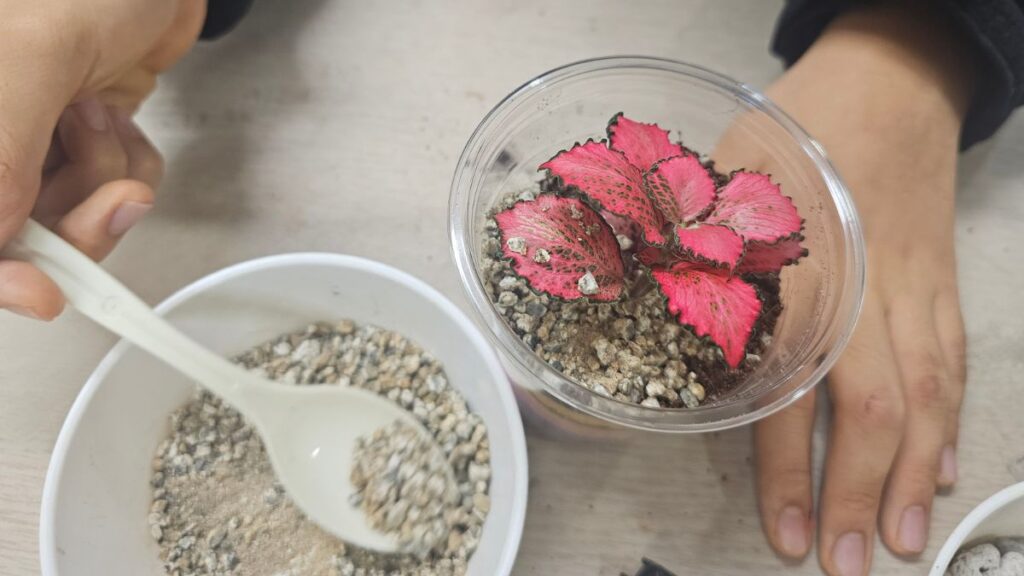
Trim the base off a plastic bottle and invert it to create a stable funnel. Pour pebbles, charcoal, or sand through the funnel’s neck for even substrate layering. This method gives precision and reduces mess in slender terrarium necks.
- Match funnel width to container opening—use larger bottles for wide jars, and smaller drink bottles for bottle terrariums to avoid spilling valuable substrate onto plants.
- Cut notches in the funnel spout to regulate flow speed, especially essential when working with fine, dusty components in layered micro terrarium systems.
- Designate color-coded bottle funnels for each substrate type to avoid accidental mixing and streamline prep time for your terrarium tools setup.
- Combine clear plastic funnels with marked measuring lines for accurate layer depths, taking the guesswork out of assembling your eco-miniature world.
- Store clean funnels and cups with lids on, keeping dust and contaminants from introducing harmful spores to the delicate terrarium environment.
These modifications put control firmly in your hands while giving each terrarium tool a specific job—making the build process smoother than ever.
Troubleshoot Common Terrarium Problems with Customized Tools
Every micro terrarium ecosystem faces its own unique set of daily challenges, from hard-to-reach dry spots to spontaneous algae blooms. Customizing your stockpile of terrarium tools to address specific issues lets you step in quickly and efficiently—no wasted movement, no panic repairs.
Whether using a trimmed makeup brush to dust off fine sand or a bent straw for directed watering, each adaptation cuts down your troubleshooting time and keeps microclimates healthy. Practical, targeted action saves your favorite jar from irreversible damage.
Preventing Soil Compaction with Homemade Aerators
Take a skewer or sturdy toothpick, and gently poke holes at regular intervals across the soil surface. This lets air flow properly, preventing root suffocation—a common downfall of densely planted closed systems. Repeat the process during routine care as your micro terrarium evolves and grows.
For deeper, broader aeration in larger vessels, bundle several skewers together with rubber bands, creating an efficient aerator. This wider tool can treat bigger areas in just a few moments without disrupting precious plant roots and is easy to store with your other terrarium tools.
Schedule aeration checks after every watering session, jotting observations in your plant care journal. This habit keeps ventilation at the top of your mind as your ecosystem matures, reducing risks of fungal blooms or compacted layers.
Algae and Mold Control with Repurposed Brushes
A small paintbrush with soft bristles provides precise control for sweeping spores or algae films off glass walls and miniature stones. Dip it in a diluted hydrogen peroxide solution for spot treatments in persistent problem areas—but always rinse thoroughly before putting the brush away.
When mold appears in substrate layers, use a chopstick-wrapped brush to isolate and lift out the contaminated sections, minimizing risk to the rest of your micro terrarium. Separate this brush immediately post-use and sanitize it before returning it to your toolkit.
Label specific brushes for “contaminant cleanup” and store these separately from your maintenance tools. This clear division improves speed and safety, reducing the likelihood of accidentally spreading pests or spores throughout your carefully curated environment.
Keep Your DIY Terrarium Tool Kit Organized and Adaptable
Every successful micro terrarium project depends on easy access to well-maintained, clearly labeled tools. Sorting terrarium tools by function and frequency means you’ll spend less time searching and more time enjoying your lush mini ecosystems.
Begin by grouping tools in labeled boxes or caddies. Designate sections for planting, maintenance, watering, and emergency repairs. Add colored tape or rubber bands for quick visual cues and ensure the most-used items are within reach.
- Store small tools in clear jars, so you spot the chopstick or funnel you need at a glance. This also keeps them dust-free and hygienic.
- Hang longer items, like bent spoons and rakes, on magnetic strips mounted near your work area for instant retrieval—and to save valuable surface space.
- Insert silica gel packets into your storage kit to prevent moisture buildup and rust on any metal-based terrarium tools, preserving their function for future projects.
- Rotate your tools seasonally, retiring any that are worn or contaminated. Keep a running checklist in your plant journal to ensure nothing goes missing in the shuffle.
- Share your system with other enthusiasts, trading tips for new storage hacks and maintaining a dynamic, supportive terrarium-building community.
With an organized toolkit, you’ll build, maintain, and troubleshoot your micro ecosystems efficiently. Clear spaces promote calm, creative terrarium work sessions.
Concluding Thoughts on Crafting Terrarium Tools from Everyday Household Items
Repurposing everyday household items empowers you to build a tailored, effective arsenal of terrarium tools. By adapting what’s already in reach, you cut costs and boost sustainability—adding real value to each micro terrarium ecosystem you nurture.
Each tool, no matter how humble, finds its place. Your bent spoons shape soil, chopsticks place new growth, and improvised brushes erase damage. The cumulative impact is clear: more efficient projects and healthier plants, with professional results achievable at home.
Experiment, refine, and share your favorite terrarium tool adaptations with others who love small-scale ecosystems. Stay curious, keep innovating, and watch your micro worlds thrive—with your hands, your vision, and a few simple household transformations.
Frequently Asked Questions
What are the best household items to start crafting terrarium tools?
Start with chopsticks, butter knives, toothbrushes, and clean snack bottles. Each item fills a unique role—planting, scooping, cleaning, or watering. Always choose items that are clean, sturdy, and easy to modify for safety and precision in micro terrarium ecosystems.
Can I safely use metal items inside glass terrariums?
Yes, provided you smooth sharp edges with sandpaper or wrap tips in tape. This prevents accidental scratching of glass and damage to delicate plant roots. Always sanitize metal tools before and after use to avoid introducing unwanted microbes.
How do I keep my terrarium tools clean between uses?
Rinse tools in distilled water and dry them fully after every session. For thorough sanitization, dip metal and plastic items in diluted rubbing alcohol and allow them to air dry. Store tools in a dedicated, dry container away from direct sunlight.
Which household tools best support fine-motor tasks in miniature terrariums?
Tweezers, bent spoons, toothbrushes, and trimmed paintbrushes excel at gentle, precise work. Modify tips for added control and keep a range of sizes on hand to fit tight spaces and sensitive plants in micro terrarium setups.
Is it worth creating specialized terrarium tools if I only have a small setup?
Absolutely. Even compact micro terrarium ecosystems benefit from tools tailored to their scale, helping reduce plant damage and substrate disturbance. Homemade adaptations maximize control, streamline ongoing care, and keep your tiny garden in prime condition, no matter its size.