
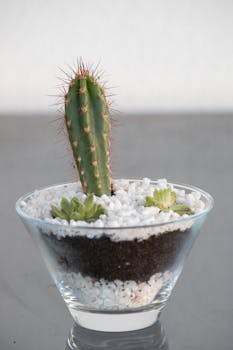
Picture a living desertscape terrarium on your desk—miniature cacti, sun-baked stones, and sculptural succulents forming a true micro ecosystem. It’s a way to bring arid beauty indoors, like pocket-sized nature you can shape and admire daily.
Micro terrarium ecosystems matter because they’re living vignettes. They blend artistry, plant care, and design into a compact space. Unlike traditional gardens, these require thoughtful layering and careful plant selection, especially when it comes to authentic desertscape terrarium styles.
If you’re curious about crafting a desertscape terrarium with succulent accents, keep reading to unlock step-by-step guidance. Below, you’ll find actionable tips and mini checklists to ensure your micro environment thrives, from rock placement to moisture control.
Transform Your Workspace by Choosing the Right Desertscape Terrarium Vessel
Selecting your terrarium’s glass container directly impacts both appearance and plant health. A clear, open-top vessel works best, echoing the wide horizons of natural deserts and providing necessary airflow for succulents.
When browsing containers, look for those wide enough to create layers and allow room for small rock features or clusters of succulents. Balance scale and function by picking something that won’t crowd your plants as they mature.
Evaluating Vessel Materials for Lasting Beauty
Glass vessels allow for easy visibility and humidity regulation, making it simple to check plant health at a glance. They’re also easy to clean, ensuring low maintenance in the long run.
Acrylic is lighter and shatterproof—a solid choice for households with children or pets. However, acrylic can scratch, losing clarity over time if not handled with care, so wipe it only with soft cloths.
Recycled jars or even wide test tubes provide upcycled options for eco-friendly terrarium projects. Whatever you select, ensure it’s at least 4 inches deep for proper rooting and drainage material.
Deciding on Shapes and Openings for Airflow
An open-top fishbowl or cylindrical vase delivers vital airflow, preventing excess moisture and mold—two hazards in a desertscape terrarium. The open style also favors cacti and succulents that crave arid environments.
Opt for straight or gently curving walls, which aid in layering materials without sudden slope shifts. Spherical bowls look striking but require careful plant anchoring to keep composition stable.
Wide-mouthed containers simplify plant placement and decorative rock arrangement. For those recreating arid canyon scenes, a rectangular vessel provides space for miniature rock formations and layered topography.
| Vessel Type | Benefits | Drawbacks | Best Fit For |
|---|---|---|---|
| Glass Bowl | Clear views, classic look | Fragile, needs support | Tabletop displays |
| Acrylic Cylinder | Lightweight, shatterproof | Scratches easily | Family spaces |
| Rectangular Tank | More surface area | Heavy, pricey | Larger designs |
| Upcycled Jar | Eco-friendly, unique | May lack style | Casual setups |
| Test Tube | Novelty appeal | Limited room | Gift items |
Arranging Substrates for Structure and Drainage in Your Terrarium
Effective layering builds strong foundations for desertscape terrarium health. Start by placing drainage material like coarse gravel or lava rock at the very bottom to mimic well-draining desert soils.
On top of the drainage layer, add a thin fabric barrier such as landscape cloth. This keeps soil from leaking down but lets water pass through, supporting moisture balance.
Mini Layering Checklist for Desert Micro Ecosystems
1. Pour a one-inch layer of gravel or small stones—this simulates the loose, rocky base of many arid environments.
- Spread a charcoal layer above the gravel to filter odors and bacteria, essential for a clean micro terrarium ecosystem. Charcoal’s porous texture limits mold and keeps roots healthy with better air exchange.
- Add a fabric sheet (nylon mesh or landscape cloth) to prevent soil from clogging drainage areas. This step mimics natural separation layers found beneath desert surfaces.
- Use cactus-specific soil mix, not standard potting soil, as it drains quickly and discourages root rot. Pre-moisten it lightly before placing, aiming for a crumbly, not damp, feel.
- Top off with thin sand or decorative gravel to recreate arid landscapes and enhance authenticity. This final touch makes a desertscape terrarium visually striking and provides a stable base for decorative stones or driftwood.
Building the substrate like this encourages lasting health and makes ongoing maintenance easier for your micro terrarium ecosystem.
Action Example: Layering a Rectangular Glass Vessel
Start by adding 1 inch of lava rocks, then a charcoal layer. Fit the fabric sheet atop and pour 2 inches of cactus soil. Sprinkle sand across the top, forming subtle ridges resembling desert dunes.
Position larger stones on top and gently press them into the sand. They shouldn’t be flush with the glass walls—leave room for roots to anchor and prevent soggy patches near plant bases.
Packing the soil tightly at the back creates a slight slope so smaller plants and pebbles stand out. This adds drama and reveals more of each habitat element when viewed from above.
- Choose coarse gravel for drainage—avoiding fine pebbles, which can compact and trap moisture, ensures your substrate remains loose and aerated.
- Add horticultural charcoal before soil—this simple rule ensures toxins and odors won’t linger, so the terrarium stays fresh longer and keeps micro-ecosystems balanced.
- Use a mesh or coffee filter as the separator—cut it to fit your container, tuck in edges, and smooth it down. This prevents root entanglement in the rock layer below.
- Select cactus soil formulated with pumice or sand—with proper texture and water movement, roots won’t suffocate, and plants won’t show soft, mushy spots caused by excess moisture.
- Top-dress with decorative sand or pebbles—pick colors matching your décor and distribute evenly for a cohesive look and minimal soil splash when watering.
Once materials are layered, review your container for separation between elements. The more distinct each line, the more impressive your desertscape terrarium appears in natural or artificial light.
Quick Rules: Substrate Care in Micro Terrarium Ecosystems
- Test the soil’s drainage before planting—pour a few tablespoons of water in, watch for pooling, and ensure the lowest layer remains dry after 10 minutes.
- Replace the charcoal and sand every year if odors persist or colors dull, keeping your ecosystem visually crisp and functionally sound.
- Pinch the soil gently; it should break apart easily, never clump or stay soggy. Roots need air pockets for growth and rot prevention.
- Incorporate a few small stones below the largest succulent to anchor roots and prevent wobbling as the plant grows upward.
- Spot clean spilled soil with a soft brush—this daily habit maintains tidy sightlines and showcases the clean edges vital to desertscape terrarium beauty.
Effective substrate maintenance brings vivid color contrast and stability, allowing each plant and accent to shine individually.
Introducing Succulent Accents and Focal Elements in Desert Terrariums
Selecting succulents suited for your micro terrarium ecosystem adds authenticity and low-maintenance flair. Go for drought-friendly species such as Echeveria, Haworthia, and Zebra Cactus, mixing textures and tones for visual richness.
Arrange plants in clusters, visualizing how sunlight hits a natural desert outcrop. Use at least three plant varieties, with taller ones at the back and short, rosette-forming types along the front edge.
Succulent Accent Scenario: The Layered Look
Someone crafting a desertscape terrarium might say, “I’ll add this Echeveria for a pop of color, then flank it with smaller Sedum for texture.” This replicates natural groupings seen in arid wilds.
Add gnarled driftwood, angled rocks, or a tiny faux skull to evoke desert storytelling. Place blue glass chips as mimics of water sources for contrast—every detail suggests a hidden microhabitat.
Tap the glass lightly while placing so soil settles and plants stay upright. Use long tweezers to nestle roots firmly without disturbing design lines or compacting sand excessively.
Scripting Desert Themes with Living Accents
For a statement piece, nestle a spiky cactus at center stage, then build a sandy ridge behind it. Place clusters of Copperstone beside the cactus, echoing real-life desert beds.
If you want to feature animal figurines or bleached wood chips, keep them off the soil and on top of the sand. This replicates natural debris while preventing mold.
As a finishing touch, dust off plant faces and stones using a soft makeup brush, revealing the textures that make a desertscape terrarium feel immersive and cohesive.
Maintaining a Healthy Microclimate in Your Desertscape Terrarium
Monitor light, temperature, and humidity levels closely to maintain a thriving micro terrarium ecosystem. Place the container in bright, indirect sunlight near a window but protect against scorching by rotating the vessel weekly.
Use a small fan or open nearby windows occasionally to prevent stagnant air. Consistent airflow mimics arid climates and keeps mildew, pests, and condensation from affecting your desertscape terrarium.
Ongoing Care Checklist for Desert Terrariums
Check for any condensation forming inside the glass. If droplets appear, remove the lid (if using one) or increase airflow to lower humidity and preserve root health.
- Water succulents sparingly—aim to keep soil barely moist, testing with a wooden skewer pressed an inch deep. If it comes out dry, water around plant bases with a syringe.
- Fertilize at half-strength every two months during growing season. Use a cactus-safe liquid, diluted into water before application, to support slow but steady micro ecosystem growth.
- Inspect leaves for signs of mushiness or mold. If a succulent softens, remove it with clean tweezers and replace only when substrate is fully dry to prevent decay.
- Brush off dust or soil once a week—focus on glass walls, succulent faces, and decorative stones. This keeps the desertscape terrarium vivid and prevents blockage of sunlight.
- Trim any leggy growth that throws off the composition. Snip stems close to the base with sharp scissors, pressing new cuttings into dry substrate to root fresh accents.
Following this care routine preserves your desertscape’s natural look and promotes the unique harmony inside a micro terrarium ecosystem.
Creating Dramatic Contrast with Hardscape and Color in Desert Terrariums
Use stone, sand, and wood to build eye-catching contrasts in your desertscape terrarium. Arrange stones in “island” clusters, leaving negative space to draw the eye and highlight each natural accent.
Embrace areas of different sand colors or pebbles, like yellow and red or white and gray. Use straight lines or diagonals—this geometric approach mimics eroded canyons and offers modern visual appeal.
Strategic Placement Techniques for Visual Impact
Turn flat pebbles on their edge, next to upright succulents. This adds height and suggests dynamic growth zones found at desert outcrops. Leave some sand plain—avoid overloading with color or accessory items.
Bury half of a driftwood stick at an angle so only the tip shows—like a sun-bleached root emerging after a sandstorm. Position the focal plant beside the highest stone for dramatic contrast.
Pair blue or teal glass with sandy browns to suggest scarce water. Each color decision must create a mood or narrative the viewer senses right away—“that really feels like a desert,” they’ll say.
Color Layering for Storytelling Ecosystems
Layering colored sands isn’t just decorative: Use it to signal shifting soils or windblown patterns. Pour in stripes, then rotate the vessel gently. Each tilt reveals subtle topography, making the tiny environment feel expansive.
Scatter mica flakes or reflective stones as sun glints. Their shimmer makes even the smallest desertscape terrarium seem to glow from within, echoing desert mirages seen on a hot horizon.
If you crave more color, add only one accent color beyond your chosen palette. This restraint keeps the scene cohesive and plant drama center stage. The end result feels like a painted micro-world under glass.
Conclusion: Designing Micro Terrarium Ecosystems that Impress and Endure
Every desertscape terrarium acts as a living artwork—fusing geology, botany, and storytelling into a compact, sustainable ecosystem. Careful choices in vessels, layering, and accent plants produce visually stunning micro environments that require little day-to-day intervention.
These miniature desert micro terrarium ecosystems offer both design flexibility and lasting plant health. With the right foundation and mindful care, each arrangement stands out as a unique indoor landscape, combining creative satisfaction and biological balance.
Let your next project be a testament to the clever mixing of art and nature. Experiment with bold contrasts, sculptural rocks, and succulent accents—your custom desertscape terrarium will inspire stories and spark curiosity with every glance.
Frequently Asked Questions
What is the best way to water a desertscape terrarium?
Water directly at the base of each succulent with a syringe or pipette. Check for dryness by inserting a skewer into the soil layer—if it’s dry at one inch, it’s time to water. Don’t mist leaves, as this can cause rot.
Which succulents are safest for a micro terrarium ecosystem?
Choose compact species such as Haworthia, Echeveria, or Sempervivum. Avoid slow-growing varieties that require deep roots or cacti with aggressive spines, since these can outgrow or damage a small desertscape terrarium over time.
How do I prevent mold or rot in my desert-style terrarium?
Maintain airflow by using an open vessel and avoiding overwatering. Remove any soft or discolored succulents promptly. Refresh the charcoal layer and brush away debris from sand and stones every few weeks to minimize risk.
Can I incorporate live moss into a desertscape terrarium?
Moss prefers humidity and may clash with dryland plants. For consistency, skip moss and stick with small, heat- and drought-tolerant succulents or decorative rocks for groundcover.
Is fertilizer necessary for a desertscape terrarium?
Low doses of cactus-specific fertilizer during the growing season encourage slow, healthy growth. Avoid strong or frequent feeds; twice-yearly applications diluted to half strength are plenty within a stable micro terrarium ecosystem.