
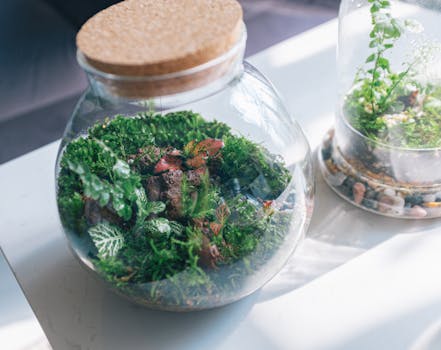
Every micro terrarium ecosystem gets its personality from the container you select. The right glass vessel terrarium draws eyes – and reveals hidden worlds on a small scale.
Vessel shape guides the arrangement of plants, moss, and tiny décor. Choosing wisely showcases your creativity, making your miniature environment pop on a desk, shelf, or window ledge.
As you read, you’ll understand not only what shapes work best, but how placement, thickness, and quirks in the glass itself matter. Let’s uncover which glass vessel terrarium matches your vision.
Selecting Vessels: Comparing Styles for Immediate Visual Impact
Confidently selecting a glass vessel terrarium means balancing design with practical display. Matching vessel form to your display vibe creates a conversation starter from the first glance.
Visualize a rounded jar on your workstation versus an angular vase by the window. Each tells a slightly different story about the micro terrarium ecosystem inside and the plants’ trajectory as they grow.
Tall Cylindrical Vessels: The Vertical Canvas
Tall, narrow vessels emphasize verticality in your glass vessel terrarium. Ferns or spiky mosses can stretch upward, making every millimeter count for lush layering.
Use stacked rocks at the base, building up as you would in a skyscraper’s atrium. These containers need plants tolerant of limited airflow at the bottom, like fittonia or smaller ferns.
Position taller accents at the rear and foreground with colorful moss. Gently mist sides for humidity, but avoid flooding—the cylindrical form magnifies water quickly.
Goblet-Style and Bowls: Invite Social Viewing
Bowls and goblet shapes offer a wide mouth for curious viewers. The open exposure lets air-loving microgreens and decorative pebbles thrive along broad surfaces.
You can mix colored sand or build miniature landscapes that look stunning from every angle. Shallow moss carpets or ferns with interesting leaf patterns work well here.
Rotate these glass vessel terrarium bowls weekly, preventing plant leaning. With friendliness in their round contours, these pieces naturally invite more frequent inspection and tending.
| Vessel Type | Best Plant Types | Aesthetic Benefit | Key Tip |
|---|---|---|---|
| Tall Cylinder | Ferns, spiky mosses | Vertical drama, compact arrangement | Place tallest plants rear, mist sparingly |
| Bowl | Mosses, microgreens | Open, 360° arrangement | Rotate weekly to balance light |
| Cube | Slow-growers, small succulents | Modern, geometric appeal | Layer substrate for strong angles |
| Cloche | Humidity-loving plants | Vintage, botanical display | Allow for venting when needed |
| Mini Jar | Dwarf ferns, sphagnum moss | Subtle, pocket-sized charm | Choose fine gravel to avoid crowding |
Decoding Glass Vessel Characteristics for Lasting Micro Ecosystem Health
Smart vessel selection means looking beyond shape. Factors like glass thickness, quality of seal, and vessel weight affect the micro terrarium’s well-being over weeks and months.
A thin-walled glass vessel terrarium creates a delicate look but shatters easily. A thicker glass offers more stability and less distortion, which matters when closely inspecting root health or moisture levels.
The Seal on Success: Lid Choices and Their Microclimate Roles
A loose-fitting cork lets humidity evaporate, perfect for succulents or cacti. Tighter glass lids create a self-regulating, humid atmosphere ideal for moss and ferns.
For daily tinkerers, hinged lids provide access for misting and subtle adjustments. “A flip of the top keeps my moss fresh without missing morning sunlight,” one terrarium hobbyist says.
Monitor moisture every few days. Excess fog or droplets suggest opening the lid for air. When moss tips brown, try a longer seal for consistent humidity.
- Choose thick glass for more stable temperature and break resistance; cleaning becomes easier without risk of accidental damage.
- Opt for wide-mouth vessels if you enjoy rearranging plants or decor; tighter mouths suit low-intervention, self-contained biospheres.
- Pick vessels with a flat base when you display on high shelves; they resist tipping and allow for more robust layers of gravel, soil, or sand.
- Select vessels with optically clear walls for photographing your glass vessel terrarium or showing color contrast in sand and foliage layers.
- Embrace quirky imperfections for vintage charm; faint waves in the glass create soft light effects and draw guests closer to inspect the world within.
A sturdy glass vessel terrarium minimizes accidental mishaps, giving you freedom to move and showcase confidently.
Weight and Portability: Easy Moves, Safe Display
Lighter glass works well for handheld displays or for those who rearrange collections often. Heavy-bottomed vessels stay rooted in place during accidental bumps by pets or children.
- Keep a lightweight micro terrarium on your work desk for instant stress relief on busy afternoons – moving it is quick and safe.
- Choose a solid, weighted vase if curious pets are nearby; slipping hazards decrease, and the vessel’s stability reassures during watering or pruning sessions.
- Consider hanging glass vessels for vertical highlights but ensure they’re neither too heavy nor too fragile for the chosen mounting hardware.
- Pair base weight with non-slip pads when displaying on glass or marble surfaces, avoiding unexpected tumbles after gentle knocks.
- When gifting a micro terrarium, choose manageable weights so friends can easily reposition or display their new green world.
Portability and stability form the foundation for daily enjoyment, letting you focus on tiny growth.
Color, Clarity, and Vessel Personality: Setting the Scene for Your Plants
A single glass vessel terrarium can cast cool highlights or amber glows, shaping the entire feel of your mini ecosystem. Glass color and lens effects influence both growth and viewing pleasure.
Clear glass supports lush green microclimates, maximizing natural light access. Colored or frosted glass diffuses light, encouraging plants like moss to spread in unexpected patterns and tones.
Light Play: Using Glass Texture to Change the Mood
Wavy or bubbled vessels create living-water effects inside your glass vessel terrarium. They scatter sunbeams, making moss shimmer while protecting delicate plants from harsh afternoon light.
Analogous to a softbox for photographers, diffused glass evens out shadows, reducing wilt risk for plants that crave indirect sun. Try placing your terrarium near east-facing windows for gentle, all-day illumination.
Mirror-polished glass lets you peer deep into roots and substrate layers—perfect for monitoring water lines or root progress in science-driven micro terrariums.
Expressing Personality: Odd Shapes and Vintage Finds
Choosing a decanter or reclaimed bottle for your glass vessel terrarium demonstrates character and creativity. Odd forms—clusters, cubes, or hourglasses—tell stories and spark conversation.
At a plant swap, a guest might exclaim, “What’s in that perfume bottle garden?” Rare shapes push you to experiment with new moss species, sand layering, or dainty fairy décor.
Add a tiny signpost, a miniature path, or a resin waterfall. The vessel’s quirks nudge you toward unique, memorable micro terrarium ecosystem designs—no two are ever alike.
Practical Planting: Matching Plant Choices to Vessel Structure
Base your plant picks on vessel suitability. A cube-shaped glass vessel terrarium calls for slow-growing, low-profile plants to keep lines clean and growth in check.
Layering tiny rocks, fine sand, and bark ensures stable drainage and color coordination. For tightly enclosed jars, stick with mosses and ferns that thrive on high humidity and low airflow.
Small Stature, Big Impact: Dwarf and Miniature Varieties
Miniature ferns, pin-cushion moss, or tiny air plants maintain scale harmony in small glass vessels. You’ll see lush, natural looks without overpowering their container.
On narrow ledges, a low-profile glass vessel terrarium filled with mini-leaved pilea or baby tears creates a line of green that sparkles when hit with morning sun.
Use small tools—tweezers, mini scoops—for intricate work. Plant in layers: pebble base, activated charcoal, soil, then moss or micro-plant. Lightly press foliage into place for immediate effect.
Arrangement Blueprints: Rhythm and Negative Space
A fishbowl-shaped glass vessel terrarium favors organic clusters, with taller plants set to one side for visual flow. Maintain open negative space for contrast and breathe room.
Imagine a tiny woodland glen out of fairy tales: winding mini pebbles, staggered heights, and a single dramatic stone for a focal point. This blueprint echoes nature’s own asymmetry.
Miniature accessories, when tucked thoughtfully, tell a story. Avoid overfilling; let glass provide “breathing windows.” Less clutter gives the micro ecosystem air and draws attention to growth progress.
Aesthetics in Action: Placement, Lighting, and Mood Creation
Set your completed glass vessel terrarium somewhere its details shine. Shelf, table, or windowsill—each spot offers unique lighting angles, reflections, and microclimate effects.
Direct sunlight intensifies humidity in closed terrariums, risking mold. Choose filtered light or LED desk lamps set to gentle intensity. Experiment with morning versus late afternoon placement for subtle color interplay.
Coordinating With Room Décor: Visual Harmony and Accents
Group several small glass vessel terrariums on an acrylic tray for a modern, curated display. ”I love lining them up along my window—each one glows differently as the sun moves,” an enthusiast says.
If your décor is minimalist, keep vessel shapes uniform and subdued. For more eclectic tastes, mix sizes, tints, and layers. Plants become the thread tying all elements together, not just the stars.
Add accent pieces—tiny figurines, painted stones, ribbons—mirroring colors from cushions or art nearby. Micro terrariums are jewelry for your space, so show them off strategically, not in hidden corners.
Light Therapy: Using Glass Vessels as Mood-Boosting Devices
Place a glass vessel terrarium near workspaces for screen breaks. Gaze at its tiny world to reset your mind and regain focus after emails or virtual meetings.
Pendant lights, fairy bulbs, or small spotlights cast shadows and highlights, animating miniature landscapes after sundown. Your terrarium shifts from daytime oasis to evening diorama.
Try battery-powered LED candles tucked discreetly behind glass, setting a tranquil nighttime scene. Low, warm lighting supports both plant health and human relaxation after a busy day.
Summary: Finding the Glass Vessel That Matches Your Aesthetic Intent
Choosing a glass vessel terrarium for your micro terrarium ecosystem unlocks creativity and brings personalized nature indoors. Embracing shape, color, and clarity transforms function into visual art.
Every aspect—from lid seal to vessel weight—shapes both your planting choices and ecosystem resilience. By pairing plants and accents to vessel structure, your living vignette remains vibrant and true to your aesthetic theme.
Let your next micro terrarium say something unique about you. The right glass container doesn’t just house your ecosystem—it magnifies purpose and draws viewers into tiny natural worlds you’ve nurtured with intent.
Frequently Asked Questions
Which glass vessel shape works best for micro terrarium ecosystems?
Choose shapes that fit your available space and plant height. Tall cylinders favor vertical moss or ferns. Bowls highlight sprawling growth and accessories.
What thickness of glass is best for micro terrariums?
Use thicker glass if you move the terrarium or want more durability. Thin glass works for delicate, stationary displays but breaks easily.
Do colored or frosted glass vessels affect plant growth?
Colored or frosted glass softens sunlight, reducing leaf burn and encouraging moss to spread. Clear glass maximizes light for sun-loving microplants in your micro terrarium ecosystem.
Are closed or open lids better for beginners?
Start with open-lid vessels. They’re easier to vent and maintain, reducing mold risk. Once you’re comfortable, explore lidded glass vessel terrarium setups for humidity-loving plants.
How do I clean a glass micro terrarium without disturbing plants?
Use cotton swabs for corners and rolled paper towels for the inside glass. Avoid using soap—just dampen your tool, wipe gently, and pat dry to prevent residue in your glass vessel terrarium.