
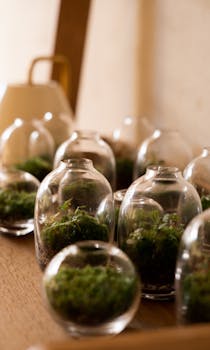
Choosing the Right Vessel for Japanese-Inspired Balance
Contrast Shape with Contents
Guide the Viewer’s Gaze
| Vessel Type | Style Vibe | Best For | Takeaway |
|---|---|---|---|
| Cylinder Jar | Modern Zen | Layered ground covers | Creates a tranquil vertical flow; stack elements in gentle ascension. |
| Orb Glass | Naturalistic, airy | Single patch of lush moss | Center moss as focal point; less is more. |
| Cube Container | Minimal, geometric | Contrast with wild-looking moss | Use sharp vessel lines to highlight moss’s organic softness. |
| Bottle with Neck | Traditional, contained | Dwarf ferns, gravel accents | Makes care easier; insert details using tweezers for precision. |
| Pendant Glass | Decorative, portable | Tiny Zen accents or stones | Try a sand ripple to evoke movement without clutter. |
Curating Moss and Stones for Textural Harmony
Blending Mosses for Layered Color
- Mix cushion moss with low-lying feather moss so they create height difference; this enhances your terrarium’s illusion of rolling hills or distant mountains.
- Use just three distinct clumps at most. Excessive moss types clutter the display, diluting Japanese simplicity.
- Pair a lighter green with a moss of deeper hue—this draws the viewer’s eye organically, echoing the contrast of light and shadow in outdoor Zen spaces.
- Trim all moss edges with sharp scissors for a sculpted yet natural look. Untidy fronds distract from tranquil lines and flow.
- Mist lightly after placement. Mist too much, and you risk overwhelming delicate new moss roots; gentle care preserves texture and growth.
Nesting Stones for Subtle Structure
- Select stones with matte textures, never glossy; glare or reflections shatter the restful mood. Soft edges and erosion marks feel natural and grounding.
- Sink the largest stone slightly into your substrate. This gives it a rooted, intentionally-placed appearance, much like a boulder in a Japanese garden is half-buried.
- Avoid symmetry—space stones according to the rule of thirds, which lets negative space enhance the arrangement’s serenity.
- Always rinse and scrub stones before adding them. Residual dust or bits can sour your ecosystem’s balance and cloud your vessel’s glass over time.
- Keep at least half an inch between each stone and moss cluster. Crowding stresses both elements and encourages mold.
Arranging Sand, Gravel, and Decorative Elements for Zen Effect
Using Sand to Draw the Eye
What type of lighting is best for moss terrariums? How do I keep mold from forming in my moss terrarium? Can I use wild-collected moss for a terrarium? Why is my moss turning brown or yellow? Are moss terrariums safe around pets?Selecting Miniature Accents Carefully
Create Balance with Layer Depth
Beginning a Japanese-Style Moss Terrarium: Step-by-Step
Building Your Terrarium Base
Placing Moss and Stones
Maintenance Rituals That Foster Long-Term Zen Vibes
Pruning and Cleaning with Mindful Intent
Refreshing Elements for Visual Clarity
Conclusion: The Enduring Zen Appeal of Japanese Moss Terrariums
Frequently Asked Questions
Indirect daylight is ideal for most moss terrariums. Avoid harsh sun, which can dry out or bleach moss. A north-facing windowsill or a bright room offers gentle, filtered light that keeps moss green without risk of overheating.
Regularly remove decaying plant material and avoid consistent overwatering. Mist lightly—just enough to keep the moss moist. Good airflow is essential; open the lid periodically for a few hours to refresh the micro environment inside the terrarium.
Yes, but sanitize thoroughly before adding it to your vessel. Soak it in water for 30 minutes, then rinse under cool water to remove insects or debris. Wild moss adapts well if collected sustainably and given proper acclimation time in the terrarium.
Browning usually indicates dryness or excessive sunlight. Mist more frequently, adjust the terrarium’s location, and ensure the substrate is damp but not soggy. Yellowing might follow overwatering—reduce misting and provide a few hours with the lid off to recover balance.
Most mosses are non-toxic, but monitor pets close to your terrarium, especially cats or small mammals, who may try nibbling the greenery. Keep vessels out of reach and avoid chemical sprays or fertilizers to ensure your moss terrarium remains pet-friendly and safe for all household members.